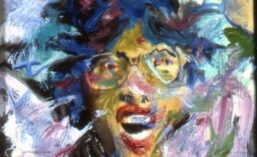
So goes the Mexican folk song – and yes I know it’s spelled with a Y. There is so much to say about AI (Artificial Intelligence) these days. The field seems to expand exponentially every day and so do the warnings and accolades. It seems like yesterday that Chat GPT was in the avant garde – just for writing – while today practically every phone and app seems to incorporate a verbal AI to facilitate its use. Hello Google Gemini! Hello Microsoft Copilot! In visual terms, there are now countless AI engines that will generate images based on prompts and a sample (often illicit) image. Here is a short list in case you want to see… 123RF, Bytedance, Cnava, Deep AI, Dream AI, Dream by Wombo, Fluxx, Ideogram, Dall.e, Stable Diffusion, Z-Image, Qwen AI. Most of these are free to use and generate illustrative art beyond your wildest expectations. I have experimented with this new medium extensively and it is no wonder everyone seems intent on identifying AI when it is used – it would definitely supplant most illustrators in speed and execution – never mind in cost. My hobby in Board Games sees forums filled with accusations and suspicions regarding its use in games recently released with shrill outrage and threats of boycotts directed at any designer or publisher who dares use any AI no matter how limited with designs being scrutinized meticulously. This is because the inclusion of AI in design seems seamless and is hard to distinguish from a human artist. Its use will invariably be included as an alternative during production by savvy and unscrupulous managers where illustrations are required – whether surreptitiously or not. And so we arrive at the main concern about AI replacing people in jobs and tanking the economy. There is no denying that algorithms are now present practically everywhere in modern life since the introduction of computers and this escalation to AI seems to be a natural progression in technology. Don’t misunderstand me, I believe that real art will never be supplanted by AI. But unless you’re ready to go off grid and back to survival basics it seems prudent to accept AI in your life and learn to adapt to it before its reality eats you alive. So go ahead and sing because it’s not worth crying about.
Tag Archives: copyright
Non-plagiarists vs Warhol’s legacy
Artists are lining up on each side of an upcoming October Supreme Court ruling brought on by the Warhol Foundation’s appeal of a lower court ruling barring it from using images without substantially changing them. The American Society of Media Photographers (ASMP), the National Press Photographer’s Association (NPPA), and the US Copyright office are among groups opposing the Warhol Foundation. A ruling in favor of Warhol would diminish the work of any photographer who values their work and puts it in the public realm, making it fair game for lazy artists like Warhol, Barbara Kruger (who lent her name to the Warhol side), Jeff Koons and Richard Prince, among others, who constantly plagiarize images in their work and call it their own with minimal if any changes. If these artists (Warhol rest in peace) want to use a published image in their art without significantly changing it, why shouldn’t they pay the original artist/photographer for the privilege? Or conversely, why not go take your own damn photograph(s) to use? Warhol was never a good draftsman – but he was excellent at pissing on his pieces. His most recognized work such as Marilyn, Elvis, and Mao use photographs, apparently taken by others and used without permission. This is an issue originating in the 20th century with photography but modern society has made it even more easy, through means of the internet, to find and use any image put out for view in the world. It must be noted however that only the most shameless artists plagiarize these works without changing them or seeking permission for them. Many of them are in that modern wing of art that denies showing the ‘artist’s hand’ in works of art – movement famously promoted by Warhol and his ‘factory’. Successful contemporary artists especially should not be given a pass on adopting images without costs. A ruling in favor of the Warhol Foundation will only promote plagiarists as they exploit less successful artists with impunity. Artists prone to using ‘factories’ and ‘assistants’ will find that industrial production of art is not so easy when you have to personally develop all your images. It is not too much to ask for these capitalist artists to sacrifice ease of production for ethical support. BTW there are already laws in most countries that logically migrate published images into the public realm after due time – this case seems to only apply to contemporary images under authorship of current persons. The Copyright office and the photographer groups are correct to oppose this outrageous over-reach by greedy artist-plagiarists and their legacy foundations.