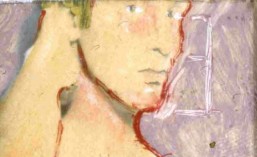
So goes the Mexican folk song – and yes I know it’s spelled with a Y. There is so much to say about AI (Artificial Intelligence) these days. The field seems to expand exponentially every day and so do the warnings and accolades. It seems like yesterday that Chat GPT was in the avant garde – just for writing – while today practically every phone and app seems to incorporate a verbal AI to facilitate its use. Hello Google Gemini! Hello Microsoft Copilot! In visual terms, there are now countless AI engines that will generate images based on prompts and a sample (often illicit) image. Here is a short list in case you want to see… 123RF, Bytedance, Cnava, Deep AI, Dream AI, Dream by Wombo, Fluxx, Ideogram, Dall.e, Stable Diffusion, Z-Image, Qwen AI. Most of these are free to use and generate illustrative art beyond your wildest expectations. I have experimented with this new medium extensively and it is no wonder everyone seems intent on identifying AI when it is used – it would definitely supplant most illustrators in speed and execution – never mind in cost. My hobby in Board Games sees forums filled with accusations and suspicions regarding its use in games recently released with shrill outrage and threats of boycotts directed at any designer or publisher who dares use any AI no matter how limited with designs being scrutinized meticulously. This is because the inclusion of AI in design seems seamless and is hard to distinguish from a human artist. Its use will invariably be included as an alternative during production by savvy and unscrupulous managers where illustrations are required – whether surreptitiously or not. And so we arrive at the main concern about AI replacing people in jobs and tanking the economy. There is no denying that algorithms are now present practically everywhere in modern life since the introduction of computers and this escalation to AI seems to be a natural progression in technology. Don’t misunderstand me, I believe that real art will never be supplanted by AI. But unless you’re ready to go off grid and back to survival basics it seems prudent to accept AI in your life and learn to adapt to it before its reality eats you alive. So go ahead and sing because it’s not worth crying about.
Tag Archives: art process
Pure in Concept
Do all artists struggle with the concept of their art as a commodity? When I started to do art it seemed like I was involved with creating as more of an intellectual struggle – being able to conceptualize a mental image, manifesting a visual idea. It was never with the intention to sell the object created or to please an audience. Yet capitalism and commercialism seem present in many works of art today and most artists are concerned with selling and survival. There are few modern artists who seem pure in concept – Sol Lewitt and Mark Rothko are exceptions that come to mind. I can identify many more artists as brazen commercialists. As a young artist I was obsessed with originality and being able to demonstrate that ideal on paper. However, that idealism was lost with pressures from real life and experience with the art world. Not many gallery owners care about anything except your art as commodity in the art market and how to increase your marketability. These ideals are the antitheses of what my goals were as a young artist. Maybe that points to my failure in life as a working artist. Which by the way I do not regret. It is important to me that my ideals were not compromised by commercialism or viewing my art as a commodity. I have always stood by the rejection of commissions and stubbornness to produce art that are personal pursuits and not those of others. Even allowing for absorbing modern movements and trends without blind adherence to them but only as part of a personal journey in visual art making. I have abandoned visual styles without hesitation when I thought they had exhausted their conceptual stimulus for me without a single thought toward their market viability. I wonder how many artists do that today? How do artists reconcile their visual art struggles with the idea of the things they create as commodities? Is creating art for others a surrender of your credentials as an artist? I would say it is yet many artists today seem perfectly satisfied with that process, their work a commodity in the market of what was once reserved for ideas and ideals.